
Jean Langlais
Composer & Organist (1907–1991)
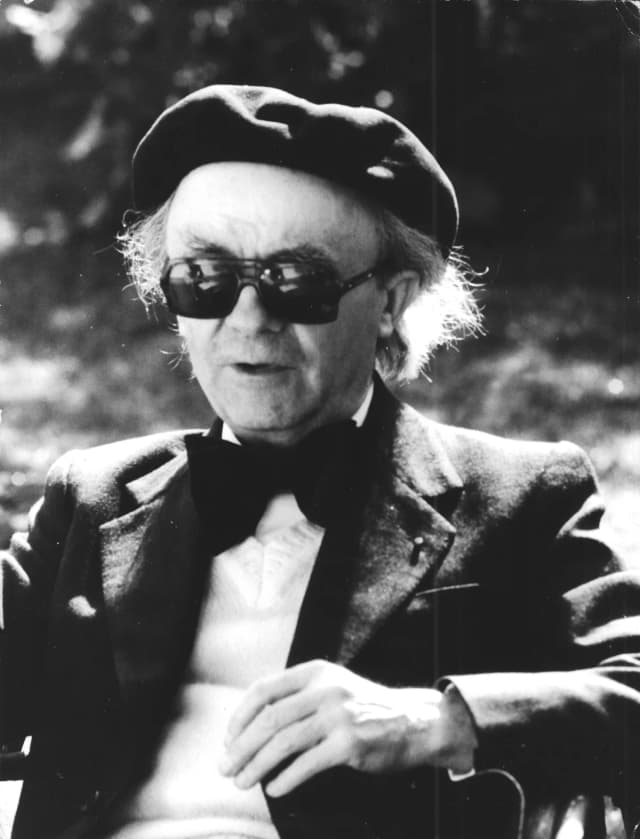
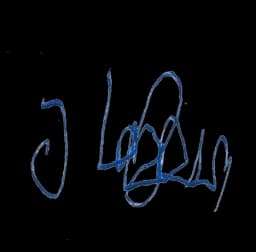
Jean Langlais (1907–1991) was one of the leading figures of the 20th-century French organ school. An organist, composer, improviser, concert performer, and teacher, he left a lasting mark on the history of organ music alongside such figures as Maurice Duruflé, Olivier Messiaen, Jehan Alain, Gaston Litaize, and André Fleury.
Over the course of an exceptional career spanning more than sixty years (1927–1991), Jean Langlais composed an extensive repertoire including works for organ as well as instrumental, vocal, and sacred music. His musical language, deeply inspired by Gregorian chant and the liturgical tradition, continues to be performed throughout the world today.
A Life Devoted to Music and the Organ
Born on February 15, 1907, in La Fontenelle, Brittany, near Mont-Saint-Michel, Jean Langlais lost his sight at the age of two due to congenital glaucoma. Despite this disability and modest family circumstances, his musical talent was quickly recognized.
At the age of ten, he entered the Institut National des Jeunes Aveugles (INJA) in Paris, where he received a comprehensive musical education including solfège, harmony, piano, violin, organ, and improvisation with such teachers as Albert Mahaut and André Marchal.
He later continued his studies at the Paris Conservatory, in the prestigious organ class of Marcel Dupré, where he studied alongside Olivier Messiaen and Gaston Litaize. In 1930, he was awarded the First Prize in Organ and Improvisation.
He further developed his improvisational skills with Charles Tournemire, and later studied composition with Paul Dukas, where he notably worked alongside Jehan Alain.

Organist of the Basilica of Sainte-Clotilde
In 1945, Jean Langlais was appointed titular organist of the Basilica of Sainte-Clotilde in Paris, succeeding Charles Tournemire. He held this prestigious position for more than forty years, until 1987.
Alongside his role as a church organist, he pursued an intense international career as a concert organist, particularly in the United States, where he gave more than 300 recitals and master classes.

Composer and Teacher
Jean Langlais was also a prolific composer, author of numerous works for organ, choral music, chamber music, and liturgical compositions.
Among his most notable works is the Missa Salve Regina, which earned him the Prix Madame René Coty in 1954 and the Grand Prix du Disque.
Alongside his work as a composer and performer, he also taught at the Institut National des Jeunes Aveugles in Paris (1939–1967) and at the Schola Cantorum in Paris (1961–1973). His teaching influenced several generations of organists and helped spread the heritage of the French organ tradition.
Honors and Recognition
- First Prize in Organ – Paris Conservatory (1930)
- Prix des Amis de l'Orgue (1931)
- Officer of the Palmes Académiques (1967)
- Officer of the Légion d'Honneur (1968), awarded by Olivier Messiaen
- Rossini Prize from the Académie des Beaux-Arts (1975)
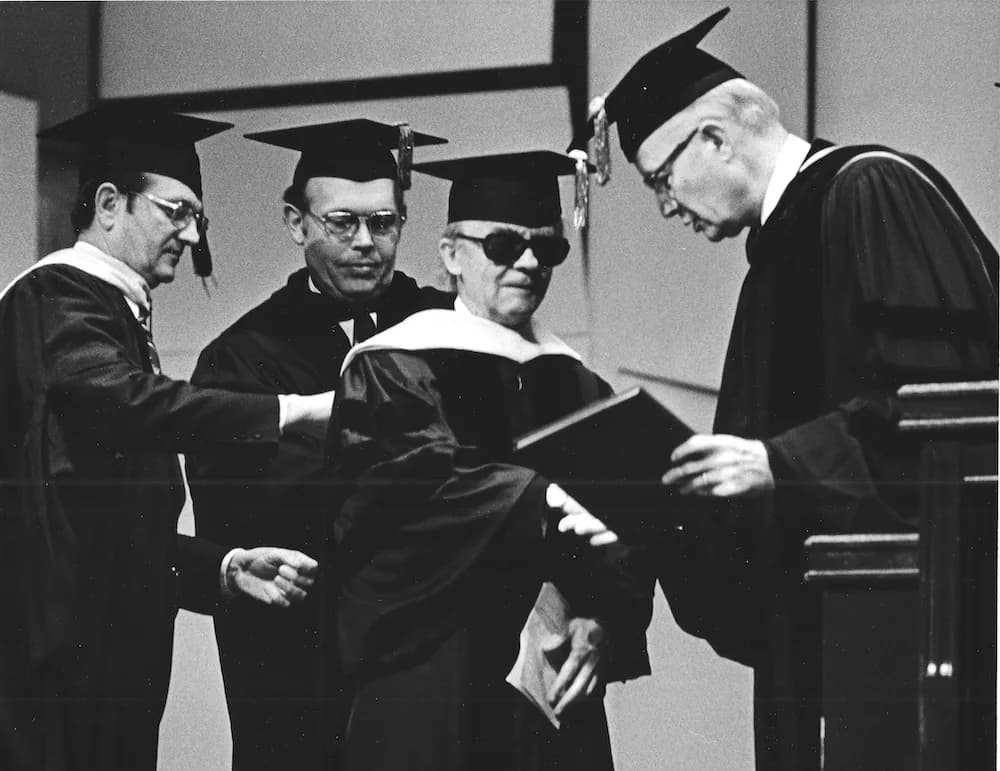
- Doctor Honoris Causa from several American universities
- Commander of the Order of Arts and Letters (1983)
A Musical Legacy That Lives On
Jean Langlais passed away in 1991, leaving behind a major body of work within the 20th-century organ repertoire. His compositions continue to be performed by organists around the world and remain an important reference for musicians and lovers of sacred music.
His musical legacy reflects a deeply spiritual vision of music, where liturgical tradition, harmonic modernity, and virtuoso improvisation come together.